Digital Input
Input Operation Modes
The device supports two input operation modes:
1. Counting
In this mode, the input works as a pulse counter, recording the number of incoming signals. This mode is used for counting pulses from mechanical or electronic generators (e.g., water meters, electricity meters, open collector signal generators, etc.). In this mode, pulses are counted in real-time, with hourly periodic archiving of data to non-volatile memory and transmission to the LoRaWAN network.
2. Digital
In this mode, the input detects state changes. For example, the device can monitor the on/off state change (e.g., for reed switches, buttons, or other similar devices). In digital mode, it is also possible to configure different priorities for different types of signals, providing flexibility in tasks where it is important to record specific state changes with varying levels of importance. This is useful for tasks where it is important to register the fact of state change rather than the number of events.
Signal Processing Modes
The device supports two signal processing modes:
1. COMBI
The device uses a debounce algorithm and pulse polling. The maximum polling frequency is limited to 40 Hz, and the minimum pulse width is not software-restricted. Pulse polling is intended to increase the energy efficiency of the device. The debounce algorithm allows the connection of a wide range of devices, including reed switches and mechanical pulse generators.
2. INTERRUPT
In this mode, pull-up is always enabled, and debounce is disabled. This mode is recommended for use with "electronic" meters with an open collector output, as well as for sources with pulse frequencies up to 200 Hz.
Digital Input Schematic
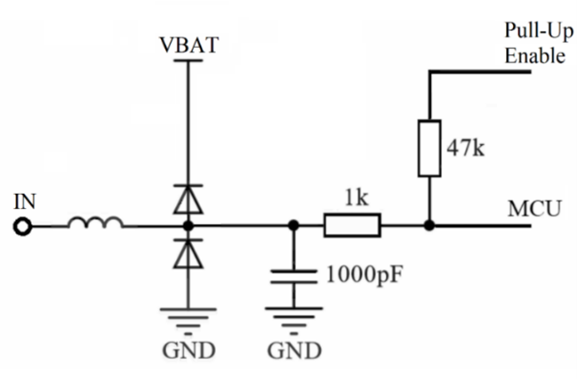
Debounce can occur in mechanical switches (such as reed switches) when the contacts do not close or open instantly, causing multiple pulses to be registered instead of one. In this case, it is important to correctly choose the device's operating mode.